
Kaziranga National Park: All You Need to Know
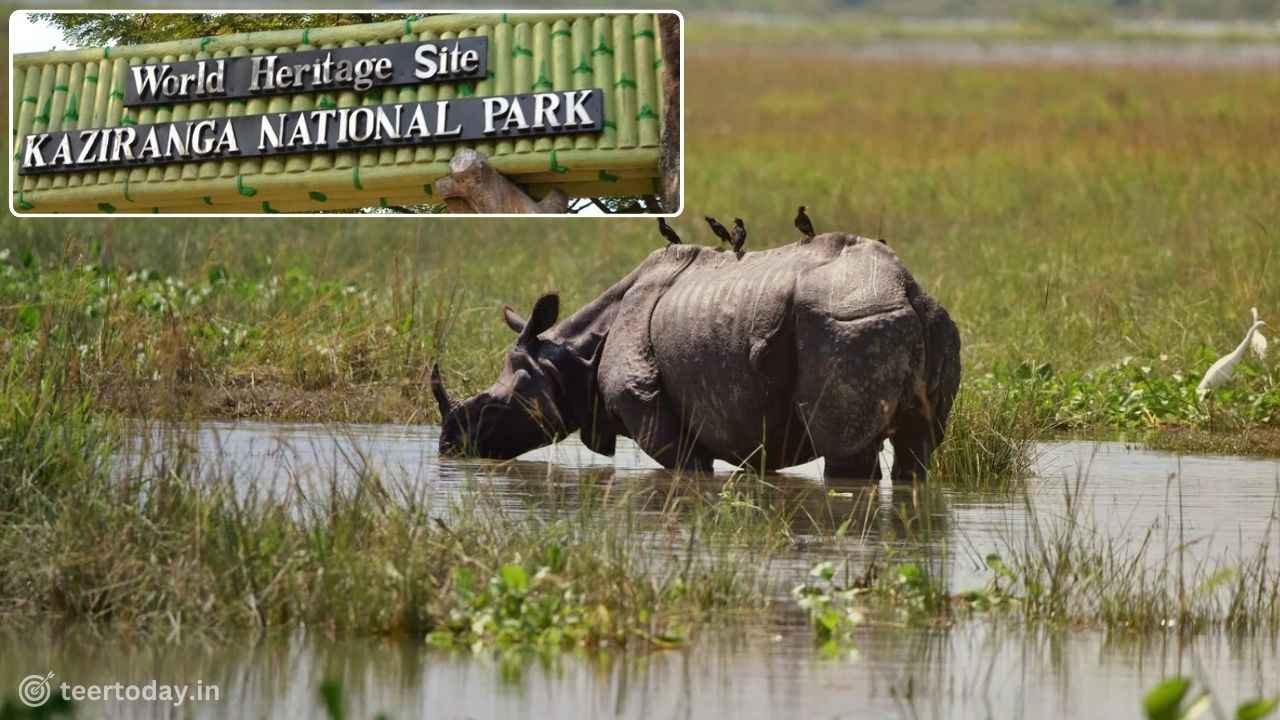
Kaziranga National Park at a Glance
Quick Summary: Kaziranga National Park is a UNESCO World Heritage Site in Assam, India, celebrated for protecting the world’s largest population of the endangered one-horned rhinoceros. The park is also home to Bengal tigers, Asian elephants, wild water buffalo, swamp deer, and hundreds of bird species, making it one of India’s most important wildlife destinations. Visitors usually plan jeep or elephant safaris during the open season from November to April, while the park generally remains closed during the monsoon due to flooding.
Key Facts About Kaziranga National Park
| Feature | Details |
|---|---|
| Location | Assam, India |
| UNESCO Status | World Heritage Site (since 1985) |
| Famous For | One-horned rhinoceros conservation |
| Major Wildlife | Rhinos, Bengal tigers, elephants, wild buffalo, swamp deer, birds |
| Best Time to Visit | November to April |
| Safari Options | Jeep Safari and Elephant Safari |
| Ideal Trip Duration | 1–2 days |
| Suitable For | Wildlife lovers, photographers, birdwatchers, families |
Frequently Asked Questions
Why is Kaziranga National Park famous?
Kaziranga is globally recognized for its successful conservation of the endangered one-horned rhinoceros and its rich biodiversity, including tigers, elephants, and numerous bird species.
What is the best month to visit Kaziranga National Park?
The most popular period is from November to April, when weather conditions are pleasant and wildlife sightings are generally more frequent.
Can visitors see tigers in Kaziranga?
Yes. Kaziranga is also a designated tiger reserve. Although tiger sightings are less common than rhino sightings, visitors may spot them during safari tours.
How many safari zones are available in Kaziranga?
The park is divided into multiple tourism ranges, each offering different landscapes and wildlife viewing opportunities. Choosing the right safari zone can improve your chances of seeing specific animals.
Is Kaziranga National Park suitable for family trips?
Yes. Families, photographers, birdwatchers, and nature enthusiasts visit Kaziranga for its wildlife safaris, scenic landscapes, and educational conservation experience.
Last Updated
Last Updated: 24 July 2026, 11:15 PM IST
About the Author
Author: Teer Today Editorial Team
Our editorial team researches and publishes informative guides covering travel, tourism, regional attractions, and lottery-related updates. Every article is reviewed for accuracy and updated whenever important information changes.
Related Pages
You can also explore:
Kaziranga National Park located in the northeastern state of Assam, India. The name of this park based on the Karbi language and the extensive presence of deer. Kaziranga name is a combination of Kazi and ranga which means goat and ranga is the name of colour of red colour as per Karbi language.
It is a living example of the power of conservation, where the balance of nature continues to thrive despite challenges. Spread over 1,030 square kilometers of lush grasslands, wetlands, and forests, the park is home to a diverse range of wildlife, including the iconic one-horned rhinoceros.
The story of Kaziranga is one of resilience, protection, and the bond between humans and nature. Its rich history, ecological importance, and ongoing conservation efforts make it a place that draws people from around the world, not for its beauty but also for the lessons it teaches about coexistence.
Baroness Mary Victoria Leiter Curzon's Contribution

Back in the early 20th century, when an American lady ‘Baroness Mary Victoria Leiter Curzon’, who was the wife of Lord Curzon (The Viceroy of India), visited Kaziranga in the year 1904. At that time Kaziranga National Park had the highest number of one-horned rhinoceros. But during her trip to the region, she failed to see any rhinoceros in the forest.
This made Miss Mary Curzon to think of the conservation of wildlife like one-horned rhinoceros and hence, she urged Lord Curzon – her husband to take some critical measures to give safety and conservation to this wildlife.
After thinking about this proposal and a lot of discussion, on November 4th, 1904, Lord Curzon presented a suggestion to bring in a wildlife reserve in Kaziranga. With his efforts, on 1st June 1905, the Kaziranga Proposed Reserve Forest came into existence in the 232 sq. km area, perfect for wildlife.
The One-Horned Rhinos: The Pride of Kaziranga National Park
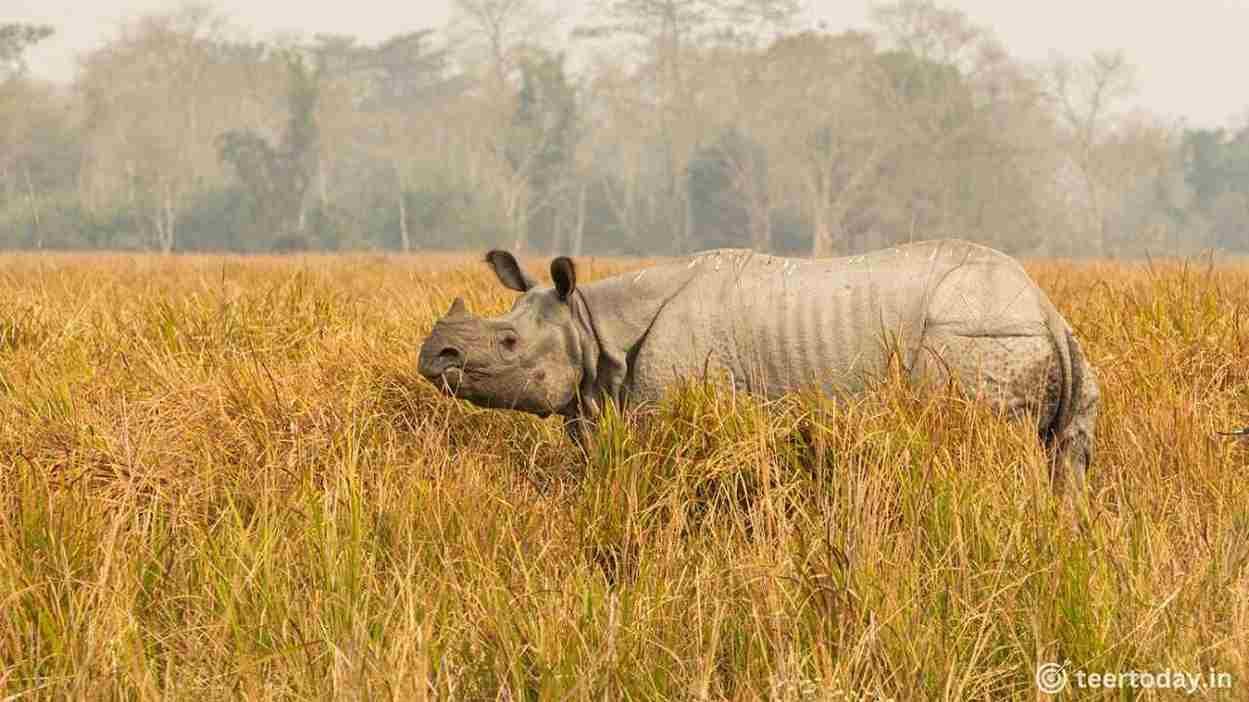
The one-horned Rhinoceroses population is one of the biggest reasons for international recognition. Because one-horned rhinos were not found anywhere except Kaziranga, Assam. In the early 1900s, there were only a few hundred left in the wild and were on the brink of extinction. Kaziranga today houses the largest population of this endangered species, around 2,613.
International recognition and awareness of wildlife reasons why Kaziranga was able to save rhinos. The reserve had always been adopting the concept of protecting the rhinos and giving them a better habitat. This provided by the perfect habitat offered by the park with its dense foliage, grasslands that cover vast distances, and its closeness to the Brahmaputra River.
History Of Kaziranga National Park
Following are some of the key events that you need to know about the Kaziranga National Park.
On February 11, 1974, the area got recognition as Kaziranga National Park.
1905: The Kaziranga Proposed Reserve Forest established.
1950: The Kaziranga Game Sanctuary renamed Kaziranga Wildlife Sanctuary.
1968: The Assam National Park Act passed to create the park.
1974: The area declared a National Park.
1985: UNESCO declared Kaziranga a World Heritage Site.
2006: Kaziranga declared a Tiger Reserve.
The reason for these recognitions is to protect the precious mother nature and wildlife.
Biodiversity of the Area
Though the one-horned rhinoceros is the key attraction of Kaziranga, the park is also home to many other remarkable species. Additionally, it is a heaven for ecologists, as tigers, elephants, wild water buffalo, swamp deer, and various species of birds found here.
In fact, Kaziranga is one of the very few places on Earth where all these species coexist. The different niches within its landscapes—the wetlands of the Brahmaputra River, thick jungles, and tall grasslands—create ideal environments for the species to live and breed. This is crucial not only for the health of the ecosystem but also plays a critical role in maintaining the balance of nature.
Furthermore, thousands of bird species call this place home, including some rare and endangered ones such as the Bengal florican and the greater adjutant stork. Consequently, Kaziranga is a paradise for birdwatchers and nature lovers alike. Moreover, the wetlands attract many migratory birds, making this an important stopover point for species migrating along their routes for rest.
Protection and management
The Indian Wildlife (Protection) Act, 1972, and the Indian Forest Act, 1927/Assam Forest Regulation, 1891, provide it with the strongest legal protection and a strong legislative framework. Over a century of protection has witnessed a remarkable recovery of the Rhinoceros population in this park.
The area became a Tiger Reserve in 2007 and since then it had six extensions, with enhanced management and protection efforts. It enjoys firm support at the level of both national and regional governments and received active involvement from national and international conservation organizations.
The management entrusted to the Assam Forest Department in line with a legally approved Management Plan. The current degree of protection and conservation for this park is counted among the very best in India.
Conclusion
Kaziranga National Park is more than an address. It is a tale of adversities conquered, triumphs sealed, and most important, an unbreakable relationship with nature. It’s a very powerful symbol of how biodiversity was pursued for our planet and what was the power of invincible dedication toward conservation of the wildlife and nature.
Kaziranga National Park is a place that will give a complete close view of the natural world in the most untouched form as a wildlife enthusiast, nature lover, or ready to see wild.
The park legacy will be a joint achievement, built on dedication by local communities, park authorities, and visitors. As the story of Kaziranga moves into the future, it will continue inspiring generations to cherish and protect the wonders of nature.
Also Check Out:
Related Shillong Teer Pages
For visitors who want to explore more information, useful internal destinations on TeerToday.in include the Shillong Teer result page, previous-result archive, Shillong Common Number section, House Ending guide, Dream Number information, Teer Formula guide, Khanapara results, Juwai results and other result archives.
I am regujlar visitor, how are you everybody? This post posted
at this web site is truly pleasant. https://Hot-fruits-glassi.Blogspot.com/2025/08/hot-fruitsslot.html
I am regular visitor, how are you everybody?
This post posted at this web site is truly pleasant. https://Hot-fruits-glassi.Blogspot.com/2025/08/hot-fruitsslot.html